

LEARNING ABOUT FRACTIONS
An Easy Introduction for Students, Teachers, Tutors, and Parents
Written and Illustrated by Bruce Silton
IMPORTANT
I give permission to all Clearwater Academy International (CAI) faculty and staff (including faculty and staff at other schools which are licensed to use CAI’s curriculum) to copy and use my Learning about Fractions as needed to carry out their educational mission at Clearwater Academy International.
Bruce Silton
September 3, 2022
FIRST EDITION
©2022 Bruce Silton
Editor: Jane Zurlinden Dryer
SECOND EDITION
©2026 Bruce Silton
Editor: Jane Zurlinden Dryer
Part One
WHAT IS A
“WHOLE THING?”
A “WHOLE THING” IS ALL OF THAT THING.
● Something which is “whole” is complete with all its parts.
● When something is the “whole thing”, nothing is left out.
● And nothing has been taken away.
Look around you.
Do you see a tree?
It is probably a whole tree.

Do you see any people? Are they whole people?
Can you see the sun? That is a whole sun.

You sleep in a whole bed. You sit on a whole chair next to a whole table and eat breakfast with a whole fork or spoon. You drink milk or juice from a whole glass. Then you use a whole toothbrush to clean your teeth. You get into a whole car for the ride to school.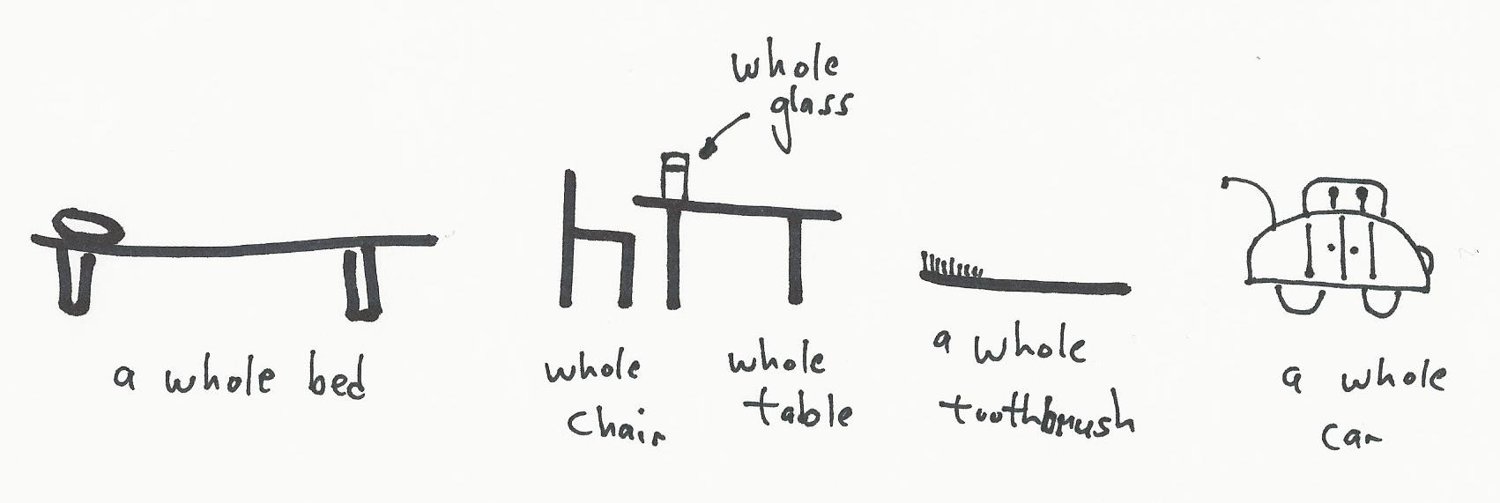
When you get to school, you open a whole door to get into your whole classroom. And a whole teacher does the roll call to start the whole school day.
Part Two
Definition of “SHOW”
In this easy introduction to fractions, the word “show” will be used many times to help define the different kinds of numbers. So, let’s define the word “show” clearly and fully right here at the beginning.
Definition of “SHOW”: WHEN A PERSON SHOWS SOMETHING, THEY POINT IT OUT CLEARLY SO OTHER PEOPLE CAN SEE IT AND UNDERSTAND IT BETTER.
Here’s an example of showing something so others can see it and understand it better: “The student wrote an exclamation mark at the end of the sentence to show surprise or excitement to those people reading his story.”
The exclamation mark! SHOWS excitement or surprise.
The exclamation mark itself is NOT the person’s actual surprise or excitement.
The exclamation mark is just a line with point ! on paper.
The actual excitement or surprise is an emotion, a feeling that happens in a real person. The exclamation mark shows or points to or communicates about a real person’s actual feelings.
Here is another example of how “show” is used: “After the movie, Billy put both thumbs up to show Mary that he loved the movie.”
Obviously, Billy’s thumbs are not his actual emotion and personal enjoyment of the movie. But Mary, seeing Billy’s two thumbs up, would immediately know that he really liked that movie!
Part Three
The Truth about “Numbers”
“Number” is the next important word on the road to understanding fractions.
We can now use the word “show” to help define the word “number.”
Of course, everybody knows what a number is. But do they? Do you really? Maybe…maybe not.
Let’s learn the truth about numbers. Here is the definition:
Definition of “NUMBER”: A NUMBER IS ANYTHING (yes, ANYTHING!) USED TO SHOW HOW MANY THINGS.
And that is all a number is: something — anything, no matter what — that shows how many things.
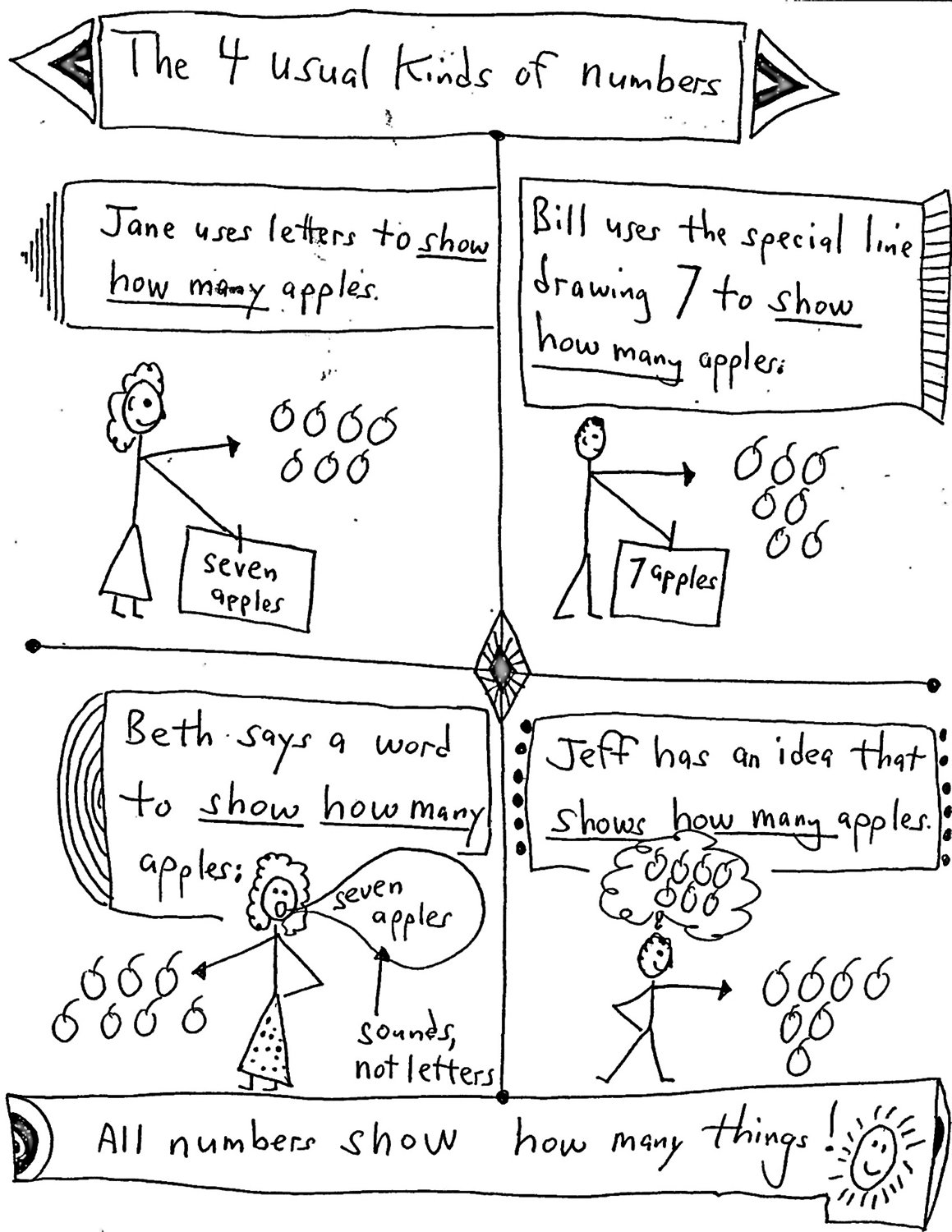
Look carefully at the drawing on the previous page:
•The letter number (“seven”)
• The special line drawing number (7)
• The sounds or spoken word number (“seven”)
• The idea number of seven
THESE NUMBERS ARE NOT THE ACTUAL APPLES.
That leads to a very important idea about numbers
A Very Important Idea about Numbers
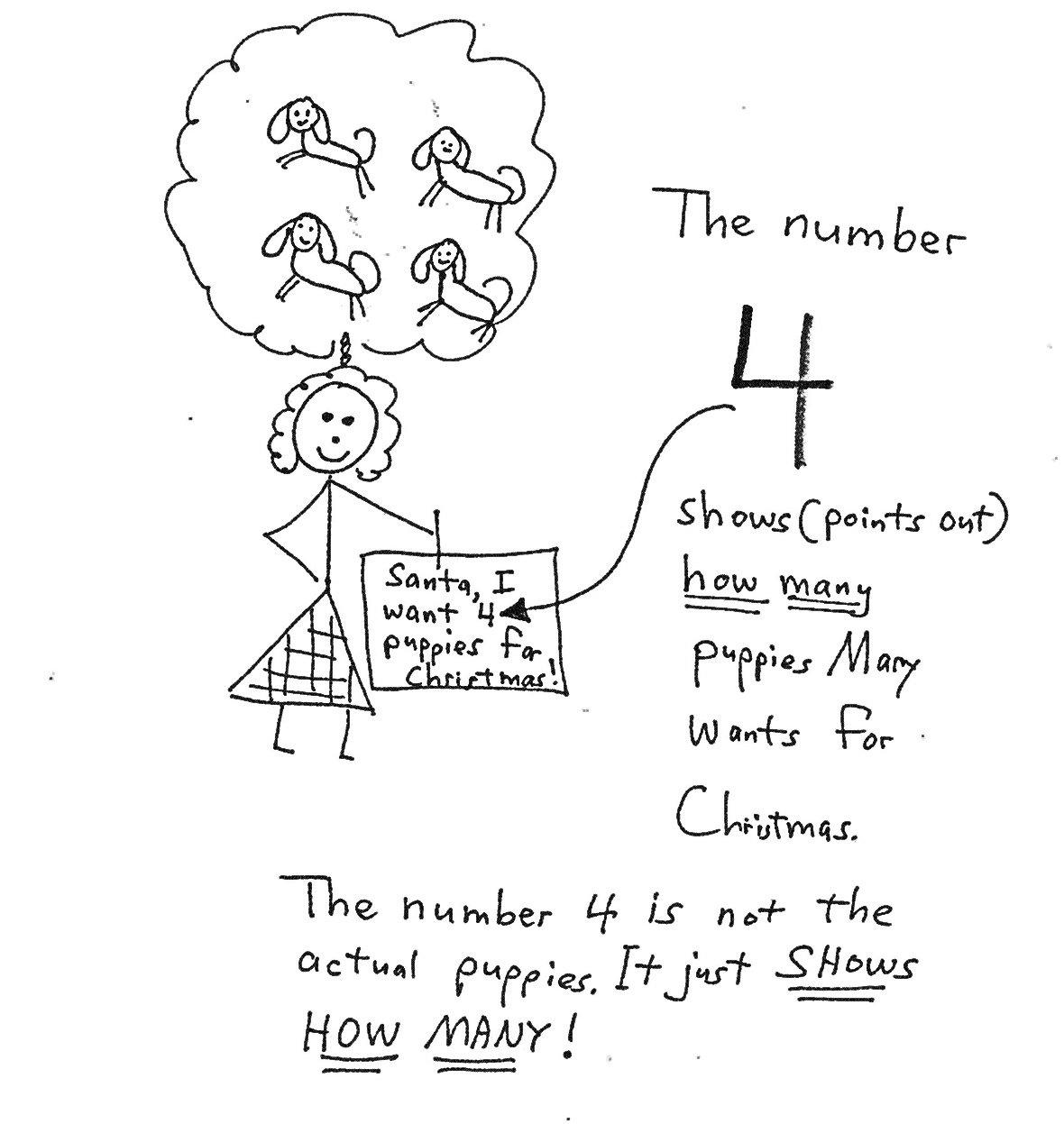
Look back at the drawing of the number 4 on page 14. The line drawing 4 is made of ink on paper and looks like this:
4
The line drawing 4 is NOT the four, real pups. The pups are real living animals. The line drawing 4 just tells how many of these living things there are. So, numbers are NOT the real things themselves. Numbers are just words or sounds or line drawings or ideas that point out (show!) HOW MANY real things there are.
And that’s exactly why we need numbers: WE HAVE TO KNOW HOW MANY MINUTES OR SANDWICHES OR CHICKENS OR EGGS OR PEOPLE OR FEET OR DOLLARS.
So, numbers work the same way as exclamation marks (and periods or questions marks or thumbs up.) NUMBERS show something very special that is sooo important to living well. THEY COMMUNICATE OR SHOW THE IDEA OF HOW MANY THINGS.
Part Four
What is a WHOLE NUMBER ?
Now we know about whole things and numbers.
The next major idea on the road to understanding fractions is “whole number”. Let’s fully define what a “whole number” is:
A WHOLE NUMBER SHOWS HOW MANY WHOLE THINGS.
Here are some whole numbers. Each whole number shows how many whole things.
1 whole pup
2 whole parents
8 whole carrots
10 whole ice cream cones
15 whole friends
24 whole hats
163 whole bananas
REMEMBER,
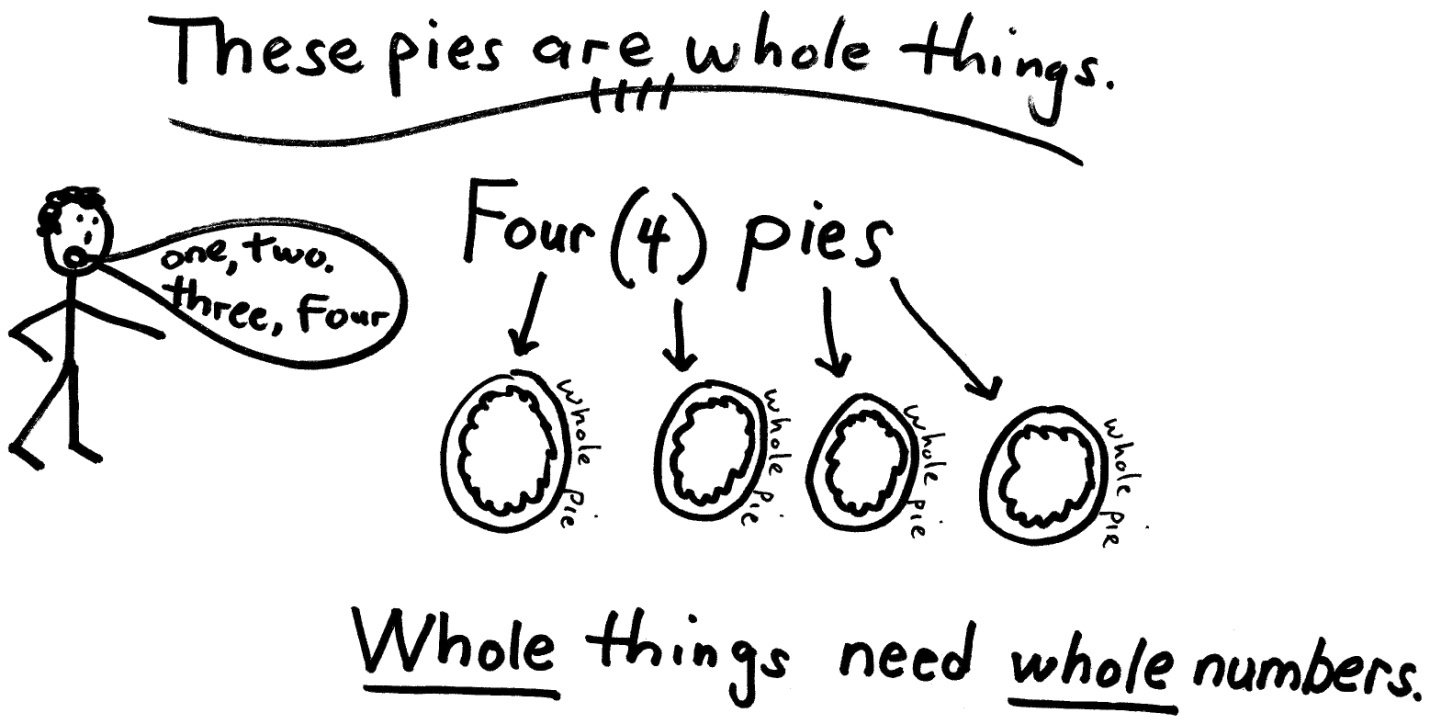
We use whole numbers to show how many WHOLE things.
1, 2, 8, 10, 15, 24, 163
The whole number 4 being used to show whole pies:
Part Five
FRACTIONS
But what if something is not a whole thing?
WHAT IF SOMETHING IS SEPARATED INTO EQUAL PARTS?
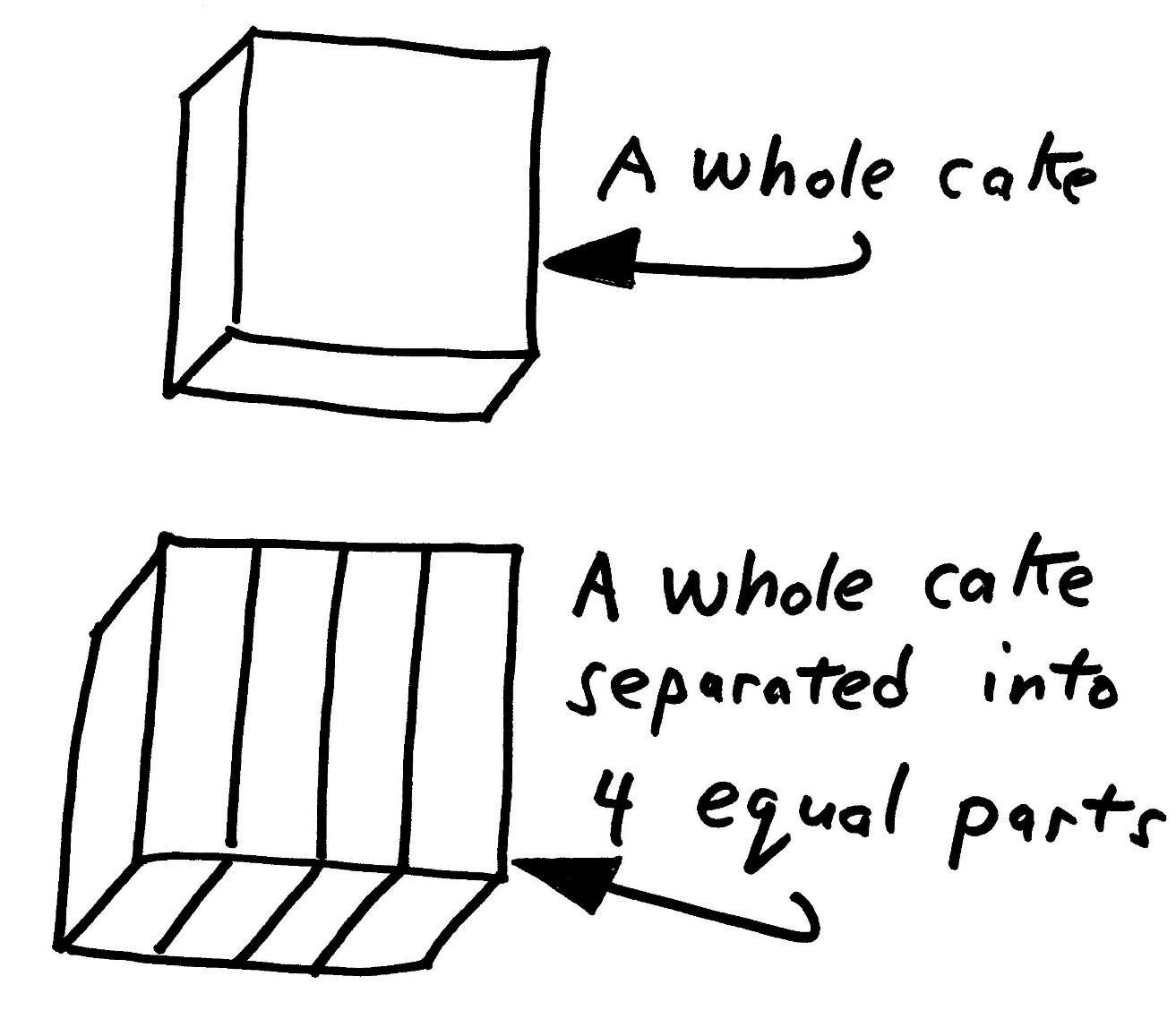
Then we cannot use whole numbers to show how many equal parts of that thing.
We need a different kind of number. We need a…
FRACTION!
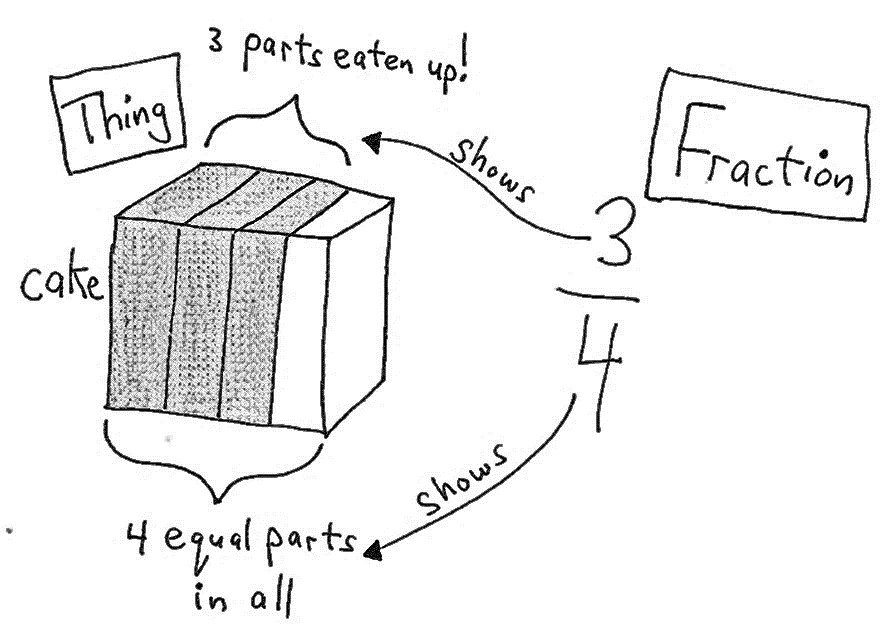
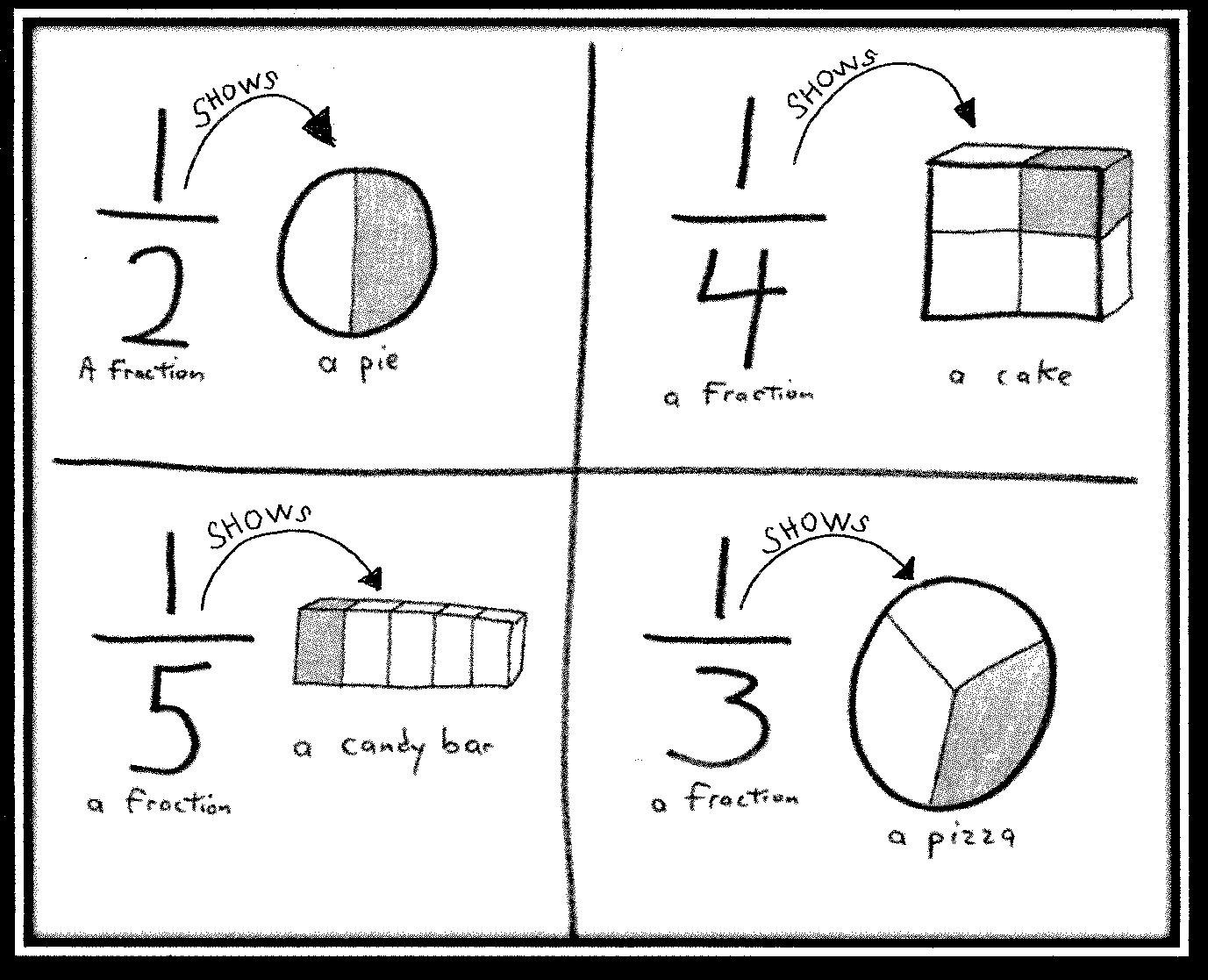
A FRACTION IS A NUMBER THAT SHOWS EQUAL PARTS OF SOMETHING.
THESE NUMBERS ARE FRACTIONS:
12141513
WHY ARE THESE NUMBERS FRACTIONS?
Because A FRACTION IS ANY NUMBER THAT SHOWS EQUAL PARTS OF SOMETHING.
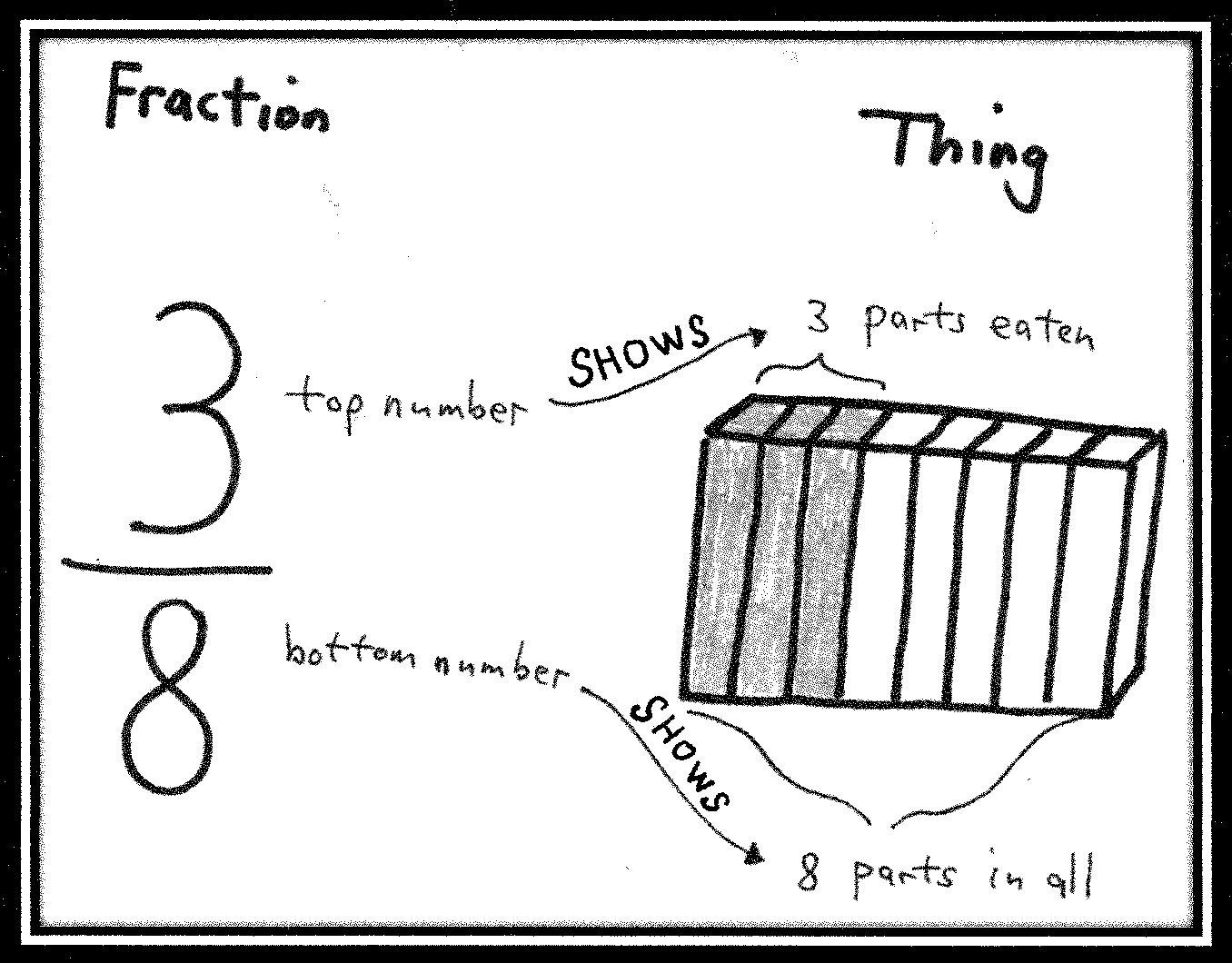
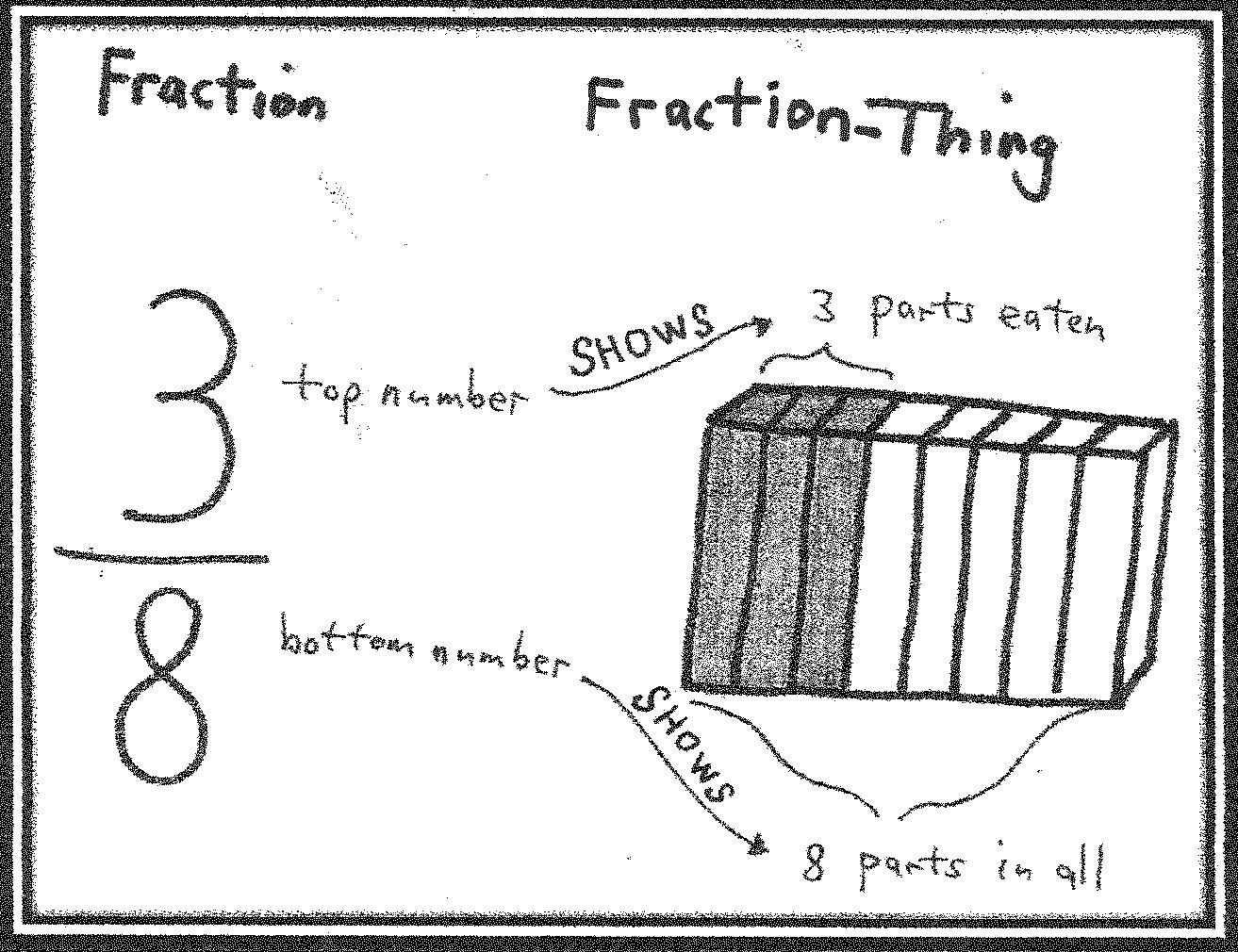
The Fraction 3/8
shows 3 of the 8 equal parts of the cake.
WHAT
A FRACTION IS NOT
FACT: FRACTIONS ARE NOT WHOLE NUMBERS.
● WHY ARE FRACTIONS NOT WHOLE NUMBERS?
● BECAUSE FRACTIONS DO NOT SHOW HOW MANY WHOLE THINGS.
● FRACTIONS SHOW EQUAL PARTS OF THINGS.
AND IT IS NOT TRUE THAT A FRACTION IS A THING.
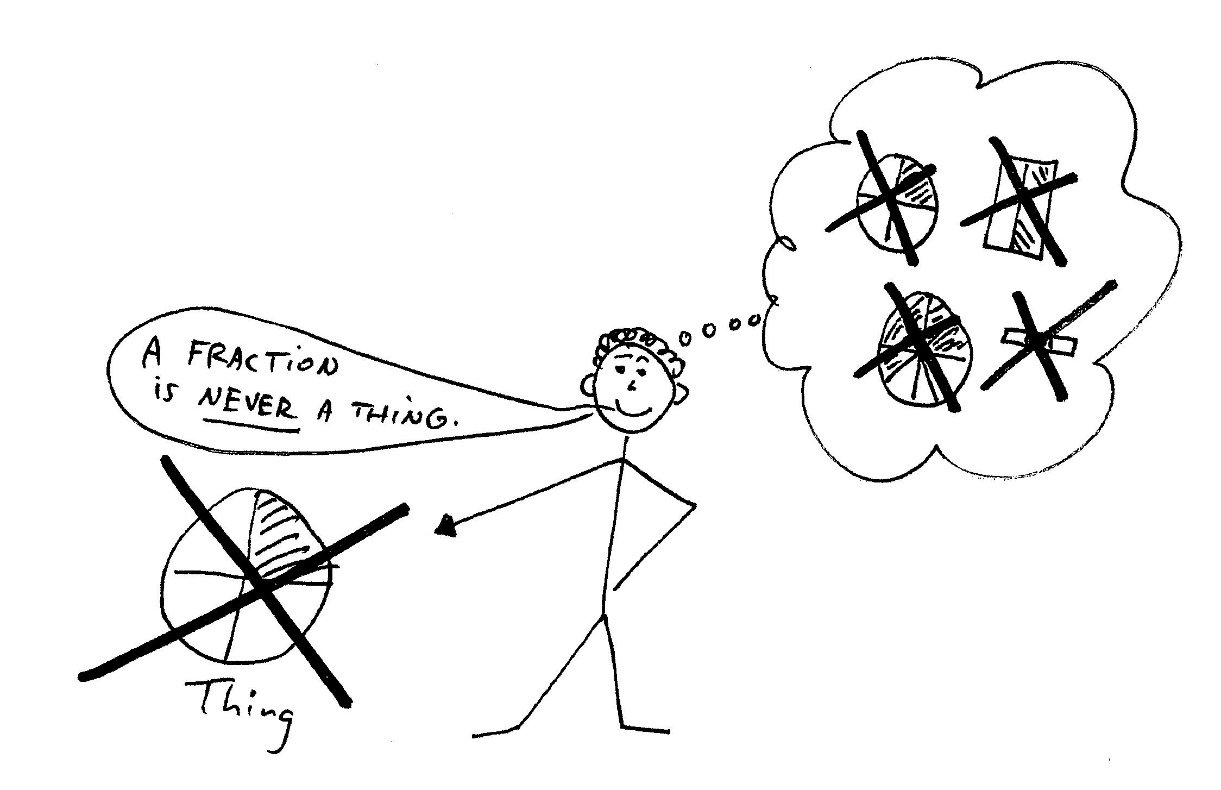
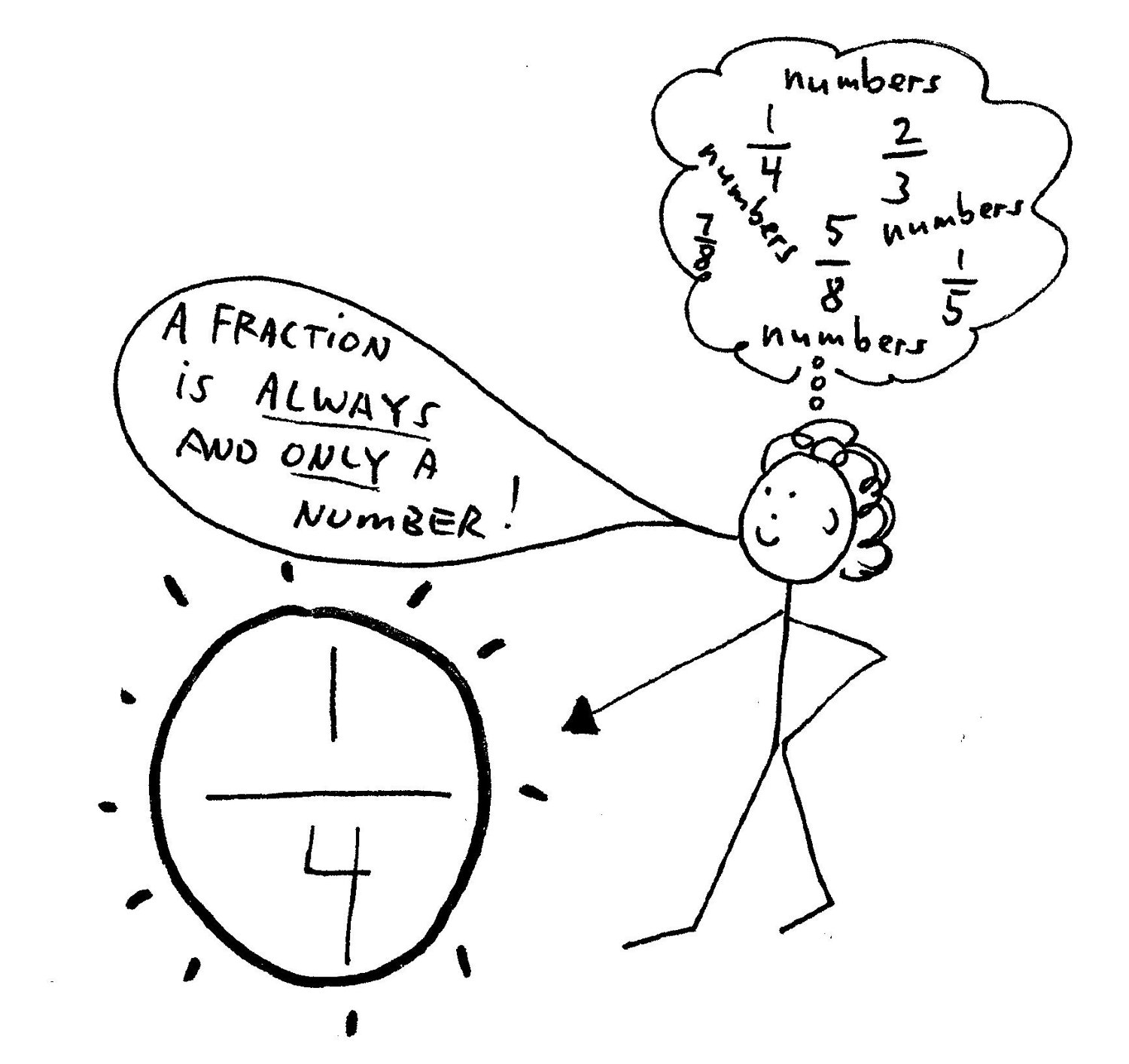
A FRACTION IS ALWAYS AND ONLY A NUMBER!
FACT: MATH FRACTIONS ARE ONLY AND ALWAYS NUMBERS, NOT THINGS.
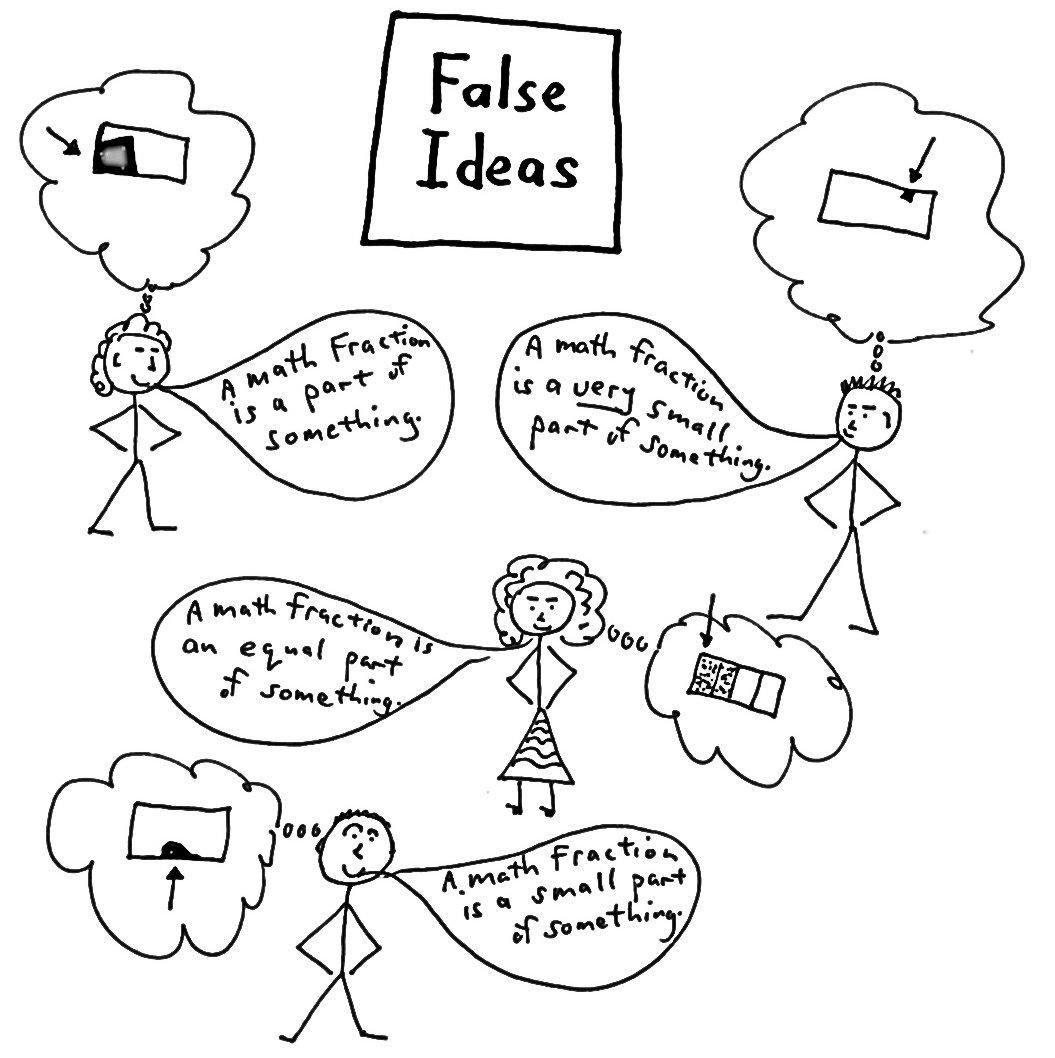
A MATH FRACTION IS NOT:
● a part of something.
● a small part of something
● a very small part of something
● an equal part of something
FOUR FALSE IDEAS ABOUT FRACTIONS
Part Six
The Fraction-Thing
Then, what is the NAME of the REAL THING a fraction shows?
The name of the real thing a fraction shows is…
FRACTION-THING
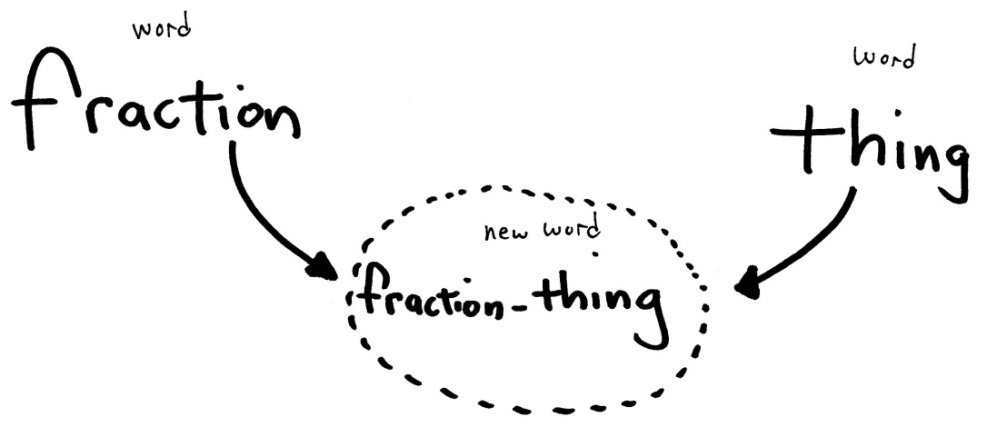
A FRACTION-THING IS THE REAL THING THE FRACTION SHOWS.
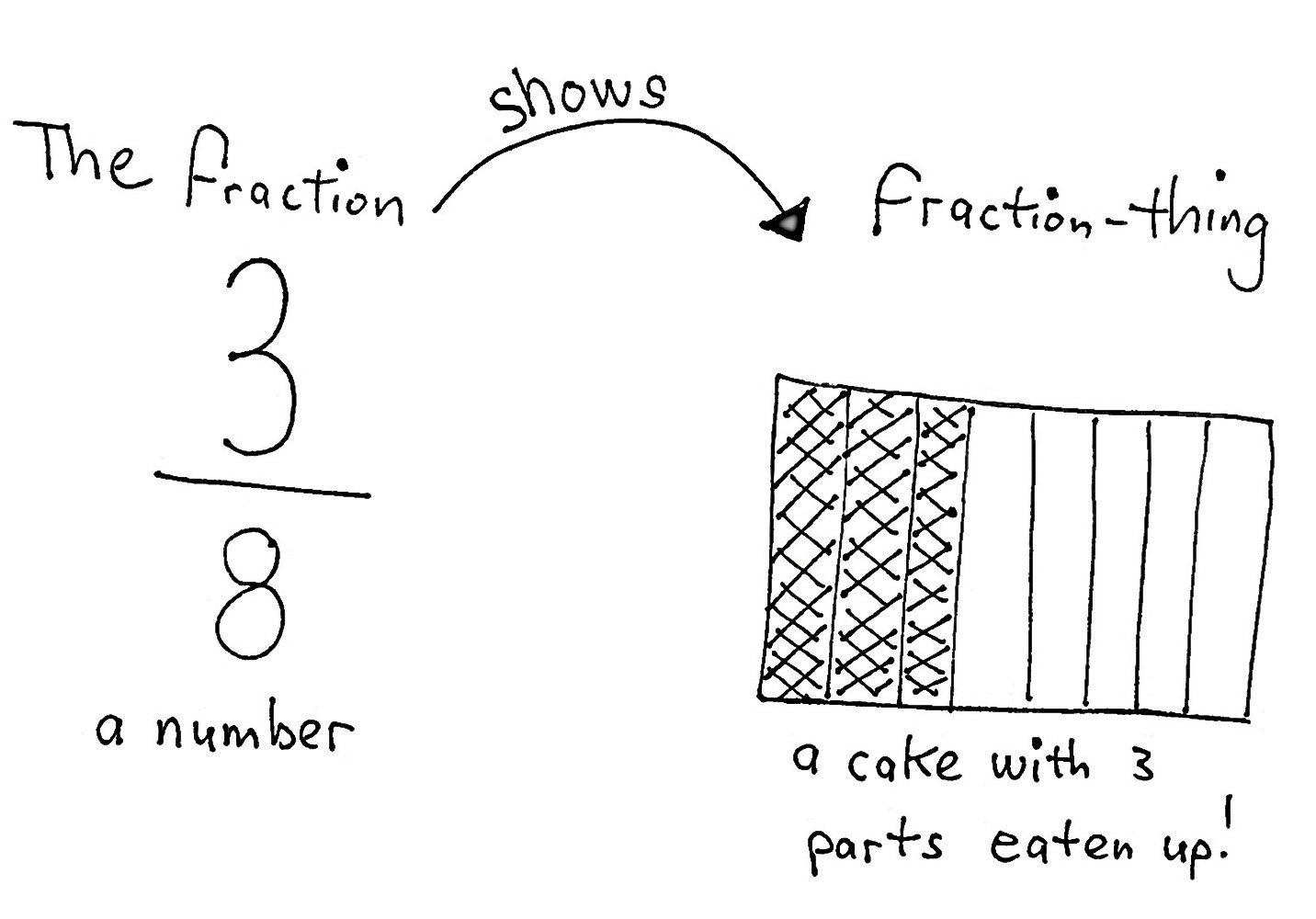
● The fraction-thing
is not a number.
● The fraction-thing is not a whole thing.
● THE FRACTION-THING IS A REAL THING SEPARATED INTO EQUAL PARTS.
● The fraction-thing includes all the equal parts of the thing…
● plus those equal parts of the actual thing that we are talking about.
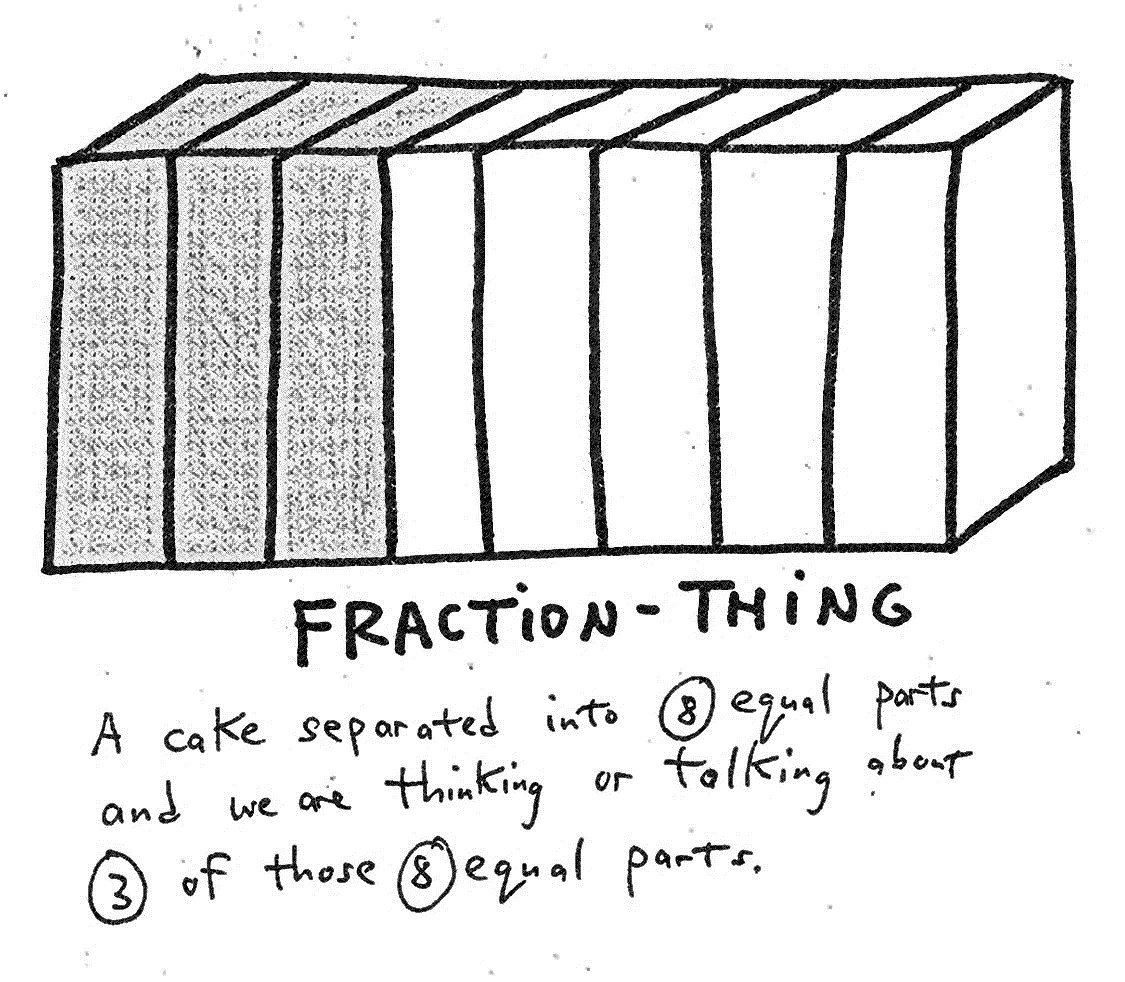
Last, here is a more complete definition of “fraction”:
A fraction is any number that shows the equal parts of a fraction-thing.
SO, WE USE WHOLE NUMBERS TO SHOW HOW MANY WHOLE THINGS.
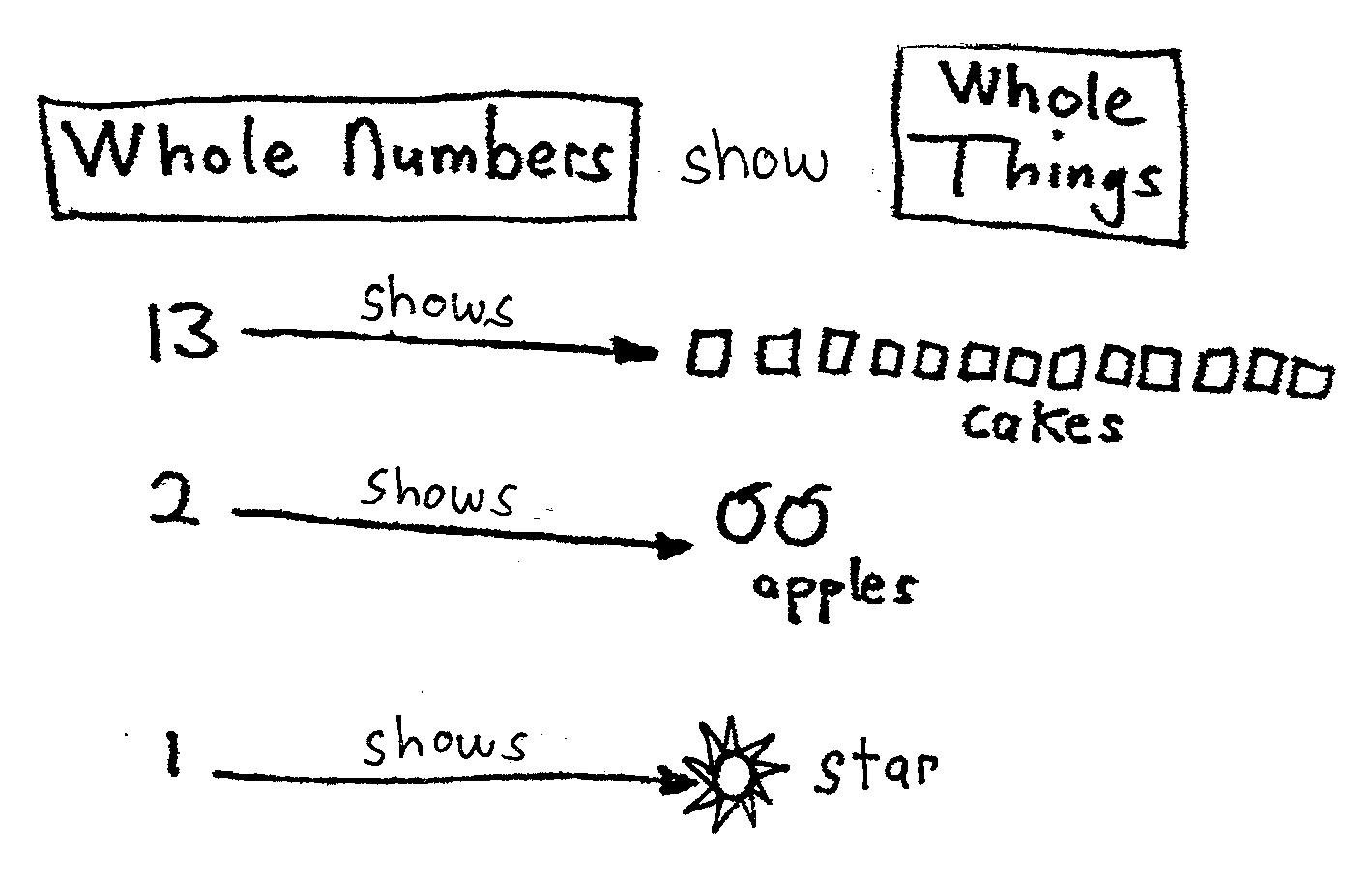
AND WE USE FRACTIONS TO SHOW FRACTION-THINGS…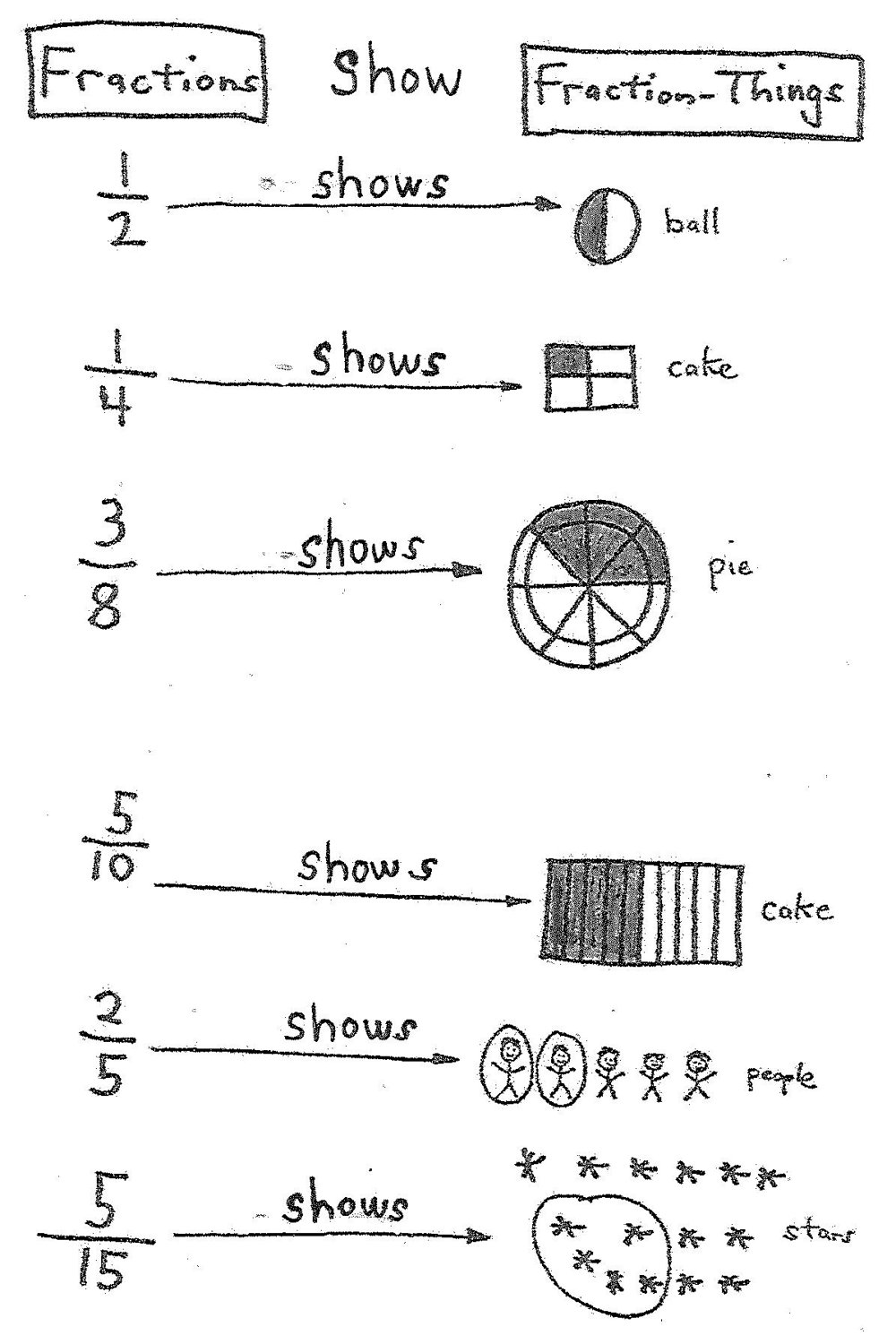
Meet the Author

Bruce Silton, the author and illustrator, is a tutor. He has been tutoring students at Clearwater Academy International in Clearwater, Florida, for 26 years and has given more than 22,000 math tutoring sessions.
From the Clearwater Academy International
Parent Newsletter for February 2020
“If you don’t know Bruce, he works in our Lower School helping our students who are really stuck on their studies. He works one-on-one with them to help the students fully understand and get moving on their study again. Bruce has perfected his method over the years, and he is the ultimate example of care and effectiveness and what we do here at Clearwater Academy.”
COMMUNICATING TO THE AUTHOR
Hello! Good communications with visitors to my websites and readers of my books are an important part of my days as an educator. You can always reach me by using the contact pages of my websites.
● Math Educator’s website: www.MathCreativity.com
● Artist’s/Designer’s website: www.BruceSiltonFineArt.com
What is Next?
You can learn more about math and fractions by studying my glossaries on the subject of fraction fundamentals:
FRACTION GLOSSARIES
● 1st and 2nd Grade Illustrated Fraction Glossary
● 3rd and 4th Grade illustrated Fraction Glossary
● 5th Grade and up Illustrated Fraction Glossary
If you cannot find these glossaries in your classroom or school, you can always get them by visiting the Bookstore at Clearwater Academy International or from my math educator’s website: www.MathCreativity.com.
You can also contact me directly by email at:
● BruceS@clearwateracademy.org
● SiltonFineArt@aol.com
And, if needed, you can reach me by phone at 727-637-9584.
P,S. You can even come to my room on the first floor of Clearwater Academy International. Please knock if the door is closed.